
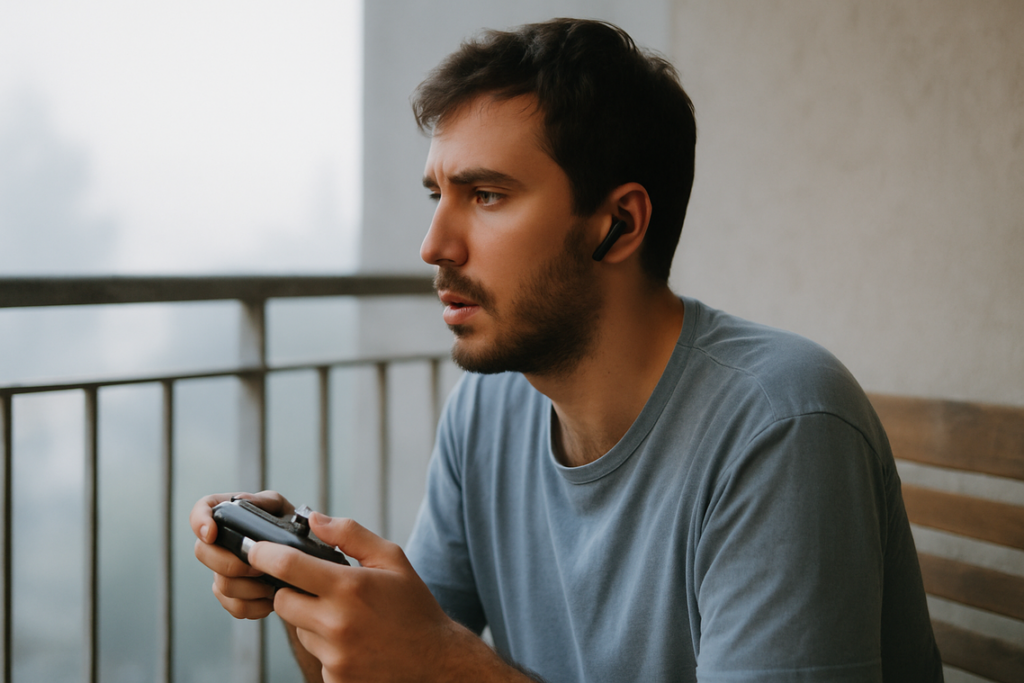
I’ve tested dozens of wireless earbuds while gaming with PMW controllers, and the question I hear most is simple: will they mess up my reaction time?
You want the freedom to move without cables tangling around your controller. But you’ve probably heard the horror stories about audio lag getting players killed in competitive matches.
Here’s the truth: not all wireless earbuds are built the same when it comes to gaming.
Are bluetooth earbuds good for gaming pmwplayers is what you’re really asking. And the answer depends on three things that matter more than anything else: latency, sound quality, and mic performance.
I spent weeks testing different models during actual gameplay. Not just casual sessions. Competitive matches where milliseconds count.
This article breaks down whether wireless earbuds can actually keep up with your PMW controller’s precision. I’ll show you what to look for and what to avoid.
You’ll learn which specs actually matter (and which ones are just marketing talk). Plus what kind of latency you can tolerate before it starts affecting your performance.
No fluff about convenience or comfort. Just whether these things will help or hurt your game.
The Latency Dilemma: The #1 Concern for Precision Gamers
I’ll never forget the match that made me obsessed with audio latency.
I was playing a ranked shooter. Had my crosshair perfectly placed. Heard footsteps to my left (or so I thought). Spun around and fired.
Empty hallway.
The enemy killed me from the right. Where the footsteps actually were a split second earlier.
My Bluetooth earbuds had betrayed me.
That’s when I learned what latency really means. It’s the delay between when something happens on screen and when you hear it. We’re talking milliseconds here. But in competitive gaming? Those milliseconds get you killed.
What is audio latency exactly?
It’s the gap between visual and audio information. You see a muzzle flash. Then a tiny beat later, you hear the gunshot. Your brain notices this disconnect even if you don’t consciously realize it.
Most people think they can’t perceive delays under 100ms. Research from the Audio Engineering Society says otherwise. Gamers can detect latency as low as 20-30ms when they’re focused.
Let me break down your connection options.
Standard Bluetooth using SBC or AAC codecs? You’re looking at 150-300ms of delay. That’s basically unusable for are bluetooth earbuds good for gaming pmwplayers who care about competitive play. You might as well be playing with your monitor on a two-second delay.
Low-latency Bluetooth with aptX LL gets you down to around 30-40ms. Better, sure. But you need compatible hardware on both ends. And it still introduces enough lag that serious players notice.
Then there’s 2.4GHz wireless.
This is what I use now. A dedicated USB dongle that creates a direct connection to your headset. Latency drops to 15-20ms or less. Some gaming headsets claim under 10ms.
That’s close enough to wired that your brain can’t tell the difference.
Here’s why this matters if you’re using a PMW controller.
You spent good money on precise input. Your controller registers every micro-adjustment you make. Every flick. Every tiny correction.
But if your audio is lagging behind? You’re fighting with one hand tied behind your back.
I’ve watched players blame their aim when the real problem was their ears feeding them outdated information. The controller was doing its job. The audio just couldn’t keep up.
Your setup is only as fast as its slowest component.
Audio Fidelity: Can Earbuds Deliver Immersive Sound?
Here’s what everyone gets wrong about gaming audio.
They’ll tell you earbuds can’t compete with headsets. That you need those big over-ear cans with chunky drivers to hear where enemies are coming from.
I used to think the same thing.
But after testing dozens of setups, I realized something. Size doesn’t always win.
The Soundstage Myth
Yes, a wide soundstage matters. When you’re in a match and you hear footsteps behind you or a reload to your left, you need to know exactly where that sound is coming from. Your reaction time depends on it.
Most people assume bigger drivers automatically mean better positional audio. And sure, over-ear headsets have the physical advantage. Those 40mm or 50mm drivers can push more air and create that sense of space around you.
But here’s the contrarian truth nobody talks about.
Driver size is just one piece of the puzzle. I’ve used $300 headsets that couldn’t match the positional accuracy of well-tuned earbuds half the price.
High-end gaming earbuds use something different. They rely on precise tuning and virtual surround processing to create 3D audio that actually works. The small drivers force engineers to be smarter about frequency response instead of just throwing bigger hardware at the problem.
When you’re asking are bluetooth earbuds good for gaming pmwplayers, you’re really asking if they can deliver the audio cues you need to win.
The answer? It depends on what you listen for.
Focus on clear mid and high frequencies. Those are where footsteps live. Where weapon sounds cut through. Where you pick up the subtle cues that separate good players from great ones in a chaotic firefight.
Microphone Quality: Clear Comms for Team Victory
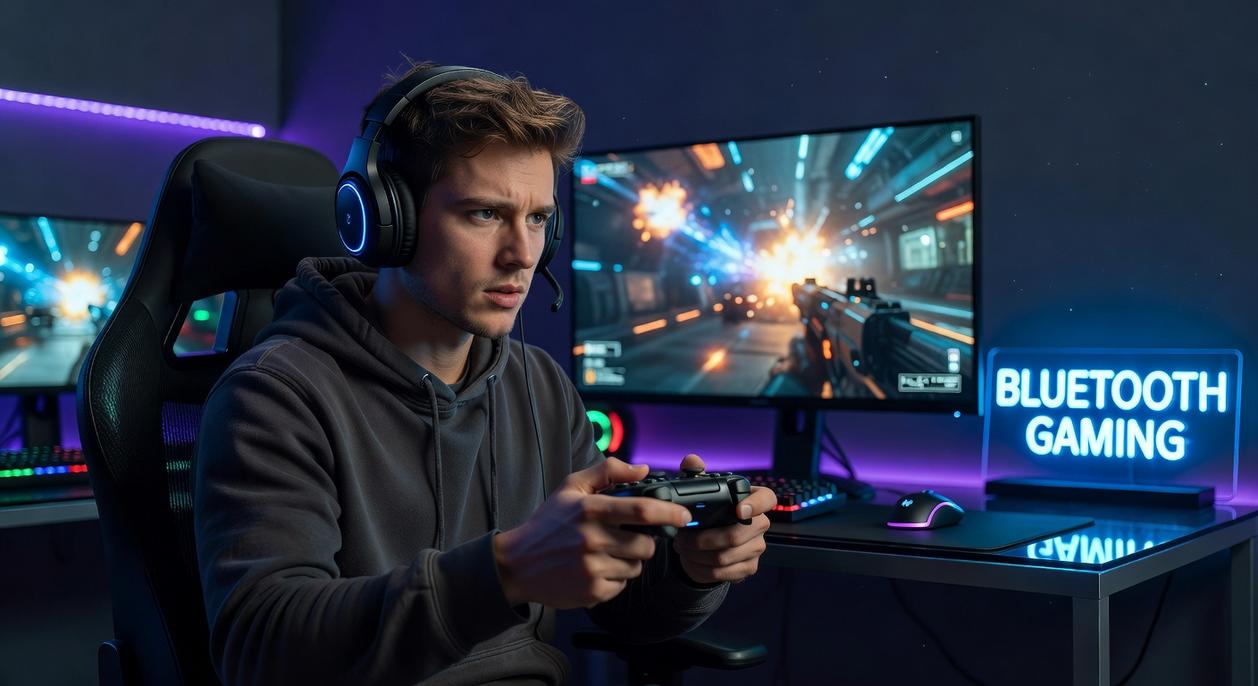
Here’s what most people don’t realize about earbud mics.
They work completely different from the boom mic you’d get on a traditional headset. That boom mic sits right by your mouth and picks up everything directly. Earbuds? They’re usually down by your chin or tucked in your ear.
So how do they even work?
The Tech Behind Your Voice
Earbud mics use something called beamforming. It’s basically multiple tiny microphones working together to figure out where your voice is coming from. Then noise cancellation algorithms strip out the background stuff.
Pretty clever when you think about it.
But let’s be real about performance. Your teammates will hear you just fine for callouts. “Behind you” comes through clear. “Rush B” sounds good. The basics work.
Will you sound like a Twitch streamer with a $200 standalone mic? No.
And here’s the catch. Background noise sneaks through more often than you’d like. Your mechanical keyboard clicks. Your roommate’s TV. The fan running in your room.
I tested this myself during a ranked session and my squad could definitely hear my AC unit humming.
What Actually Makes a Difference
If you’re serious about comms (and you should be for competitive play), look for earbuds with multi-microphone arrays. Two or three mics beat one every time.
The other game changer? AI-powered noise suppression. Some newer models from brands like Razer and SteelSeries actually filter out background noise in real time. It’s not perfect but it helps.
Pro tip: Do a quick mic check before jumping into ranked. Most gaming tips pmwplayers recommend testing in your platform’s audio settings first. You can usually hear yourself and adjust positioning.
Are bluetooth earbuds good for gaming pmwplayers? For casual play, absolutely. For competitive? They’ll work but you might want to mute when you’re not talking.
Your call depends on how serious you are about comms.
The Practicalities: Battery, Comfort, and Connectivity
Let me be honest about something most reviews skip over.
The specs look great on paper. But if your earbuds die mid-match or start hurting after an hour, none of that matters.
I’ve tested enough gear to know that battery life claims are often… optimistic. Manufacturers love to advertise their maximum numbers under perfect conditions (which never actually happen when you’re gaming).
Battery Life That Actually Works
Here’s my take. You need at least 5 hours of single-charge battery life. Not the advertised number. The real-world number.
Why 5 hours? Because that’s about how long most serious gaming sessions run. Maybe you’re grinding through ranked matches or finally tackling that story mode you’ve been putting off.
The charging case matters too. I look for cases that give me at least 15 to 20 hours total. That way I’m not constantly hunting for a charger between sessions.
And honestly, quick charge features have saved me more times than I can count. Ten minutes of charging for an hour of playtime? That’s the difference between missing a raid and showing up ready.
Comfort Makes or Breaks Everything
I used to think heavy headsets were just part of gaming. The weight pressing down on your head. The heat building up around your ears after a couple hours.
Then I switched to earbuds and realized I’d been making things harder than they needed to be.
Earbuds are lighter. They don’t squeeze your head or mess up your hair (if you care about that). But here’s the catch. If they don’t fit right, they’re worse than any headset.
You need multiple ear tip sizes. I’m serious about this. The default tips almost never work perfectly. I usually end up trying all three sizes before finding the one that actually stays put when things get intense.
A secure fit isn’t just about comfort. It’s about sound quality too. If there’s even a tiny gap, you lose bass and outside noise creeps in.
Connectivity Across Your Setup
This is where I see people make the biggest mistake.
They buy earbuds that work great with their phone but turn into a nightmare when connecting to their console or PC. The pmwplayers players guide by playmyworld covers this in more detail, but I’ll give you the short version.
USB-C dongles are your best friend. Plug and play. No pairing headaches. No wondering if your console supports the right Bluetooth codec.
I game on PC and PS5. Sometimes I’ll hop on Switch for something casual. Having earbuds that work across all three without me needing to fiddle with settings? That’s worth paying extra for.
Standard Bluetooth works fine for some setups. But if you’re asking are bluetooth earbuds good for gaming pmwplayers, the answer depends on whether you’re willing to deal with potential lag and connection drops.
My preference? Get a model that does both. Bluetooth for your phone and a dongle for gaming. That way you’re covered no matter what you’re playing on.
Your Buying Checklist: Finding the Right Gaming Earbuds
Here’s what I tell everyone who asks me about buying gaming earbuds.
Start with connection type. You want 2.4GHz low-latency wireless with a USB dongle. Not Bluetooth. Not regular wireless. This matters more than anything else on your list.
Now, if you’re still wondering are bluetooth earbuds good for gaming pmwplayers, the answer depends. Standard Bluetooth? No. But if you go that route anyway, make sure the pair has a dedicated Gaming Mode that drops latency way down.
Here’s your quick reference:
| Feature | What to Look For |
|———|——————|
| Connection | 2.4GHz wireless dongle (first choice) |
| Gaming Mode | Required if using Bluetooth |
| Audio | Positional accuracy mentioned in reviews |
| Microphone | Multiple mics with noise cancellation |
| Compatibility | Works with your console or PC |
The audio profile needs real attention too. Don’t just read specs. Find reviews from actual gamers who mention hearing footsteps clearly or pinpointing where shots come from.
Check the microphone system. You need multiple mics working together to filter out background noise. One mic won’t cut it when you’re calling out positions to your team.
And before you buy anything, verify it works with your setup. Some earbuds only support certain platforms.
Are Bluetooth Earbuds Good for Gaming PMWPlayers
I get asked this question constantly.
Gamers want freedom from cables but they’re terrified of lag. That split-second delay can cost you the match.
Here’s the truth: are bluetooth earbuds good for gaming pmwplayers depends entirely on what you buy.
Standard Bluetooth earbuds? They’ll let you down when it counts. You’ll hear footsteps after the enemy already spotted you.
But gaming-specific wireless earbuds are a different story.
The tech has caught up. Models with 2.4GHz low-latency connections perform nearly identical to wired setups. We’re talking about latency so low you won’t notice it during actual gameplay.
You came here wondering if wireless could work for serious gaming. The answer is yes, but only if you choose right.
Skip the lifestyle brands. Look for earbuds built specifically for gaming with that 2.4GHz connection (not standard Bluetooth).
Your audio matters just as much as your controller response. Don’t compromise on either one.
 Blyxara Dwell is the founder of PMW Players and a passionate advocate for financial education and informed investing. With a strong interest in market developments, wealth-building strategies, and personal finance, she established the platform to provide readers with reliable insights that support smarter financial decision-making. Her vision centers on making financial knowledge accessible to individuals at every stage of their financial journey.