
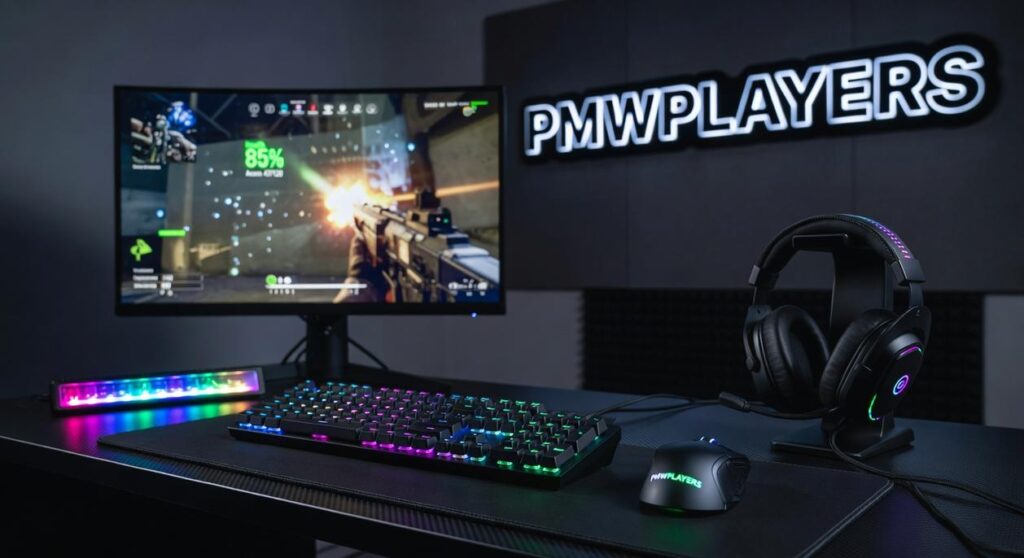
I’ve tested dozens of gaming setups over the years and I keep seeing the same mistake.
You drop $150 on a mouse with a PMW sensor and pair it with a $10 mousepad. Then you wonder why your tracking feels off.
Here’s the truth: your PMW sensor is only as good as what you put under it. And around it.
The sensor itself is incredible. It’s why pros use it. But most gamers stop there. They don’t think about the surface. They ignore cable drag. They overlook the little things that turn a great sensor into a competitive advantage.
I spent months testing how different accessories affect PMW performance. Not just reading specs. Actually measuring tracking accuracy and response times.
At gaming accessories pmwplayers, we focus on the complete setup. We test how mousepads interact with optical sensors. We measure how cables affect sensor consistency. We look at the whole system.
This guide covers the accessories that actually matter for PMW sensors. You’ll learn which mousepads give you the best tracking. Which cables won’t interfere with sensor performance. Which add-ons are worth it and which ones are marketing.
No fluff about RGB lighting or brand loyalty. Just what works with PMW technology and what doesn’t.
Decoding PMW: Why This Sensor Technology Dominates Gaming
You’ve probably seen PMW thrown around in every gaming mouse review.
But what does it actually mean?
PMW stands for PixArt Motion Wireless (or Wired). It’s a series of sensors made by PixArt Imaging that basically run the show in competitive gaming mice. If you’re serious about your aim, you’ve likely used one without even knowing it.
Some people say sensor specs don’t matter anymore. That we’ve hit a ceiling where everything performs the same. They’ll tell you to just buy whatever feels comfortable and call it a day.
And yeah, comfort matters. A lot.
But here’s where that thinking falls short. Not all sensors track the same way under pressure. When you’re flicking across your mousepad at high speed, that’s when the differences show up.
Let me break down what actually matters.
DPI (Dots Per Inch) tells you how sensitive your mouse is. Higher DPI means your cursor moves farther with less physical movement. Most PMW sensors go way beyond what you’ll ever need, but having that headroom means cleaner tracking at your preferred sensitivity.
IPS (Inches Per Second) is where things get real. This measures how fast you can move your mouse before it loses track. Modern PMW sensors handle 400+ IPS. That’s faster than any human can swipe.
Acceleration determines if your mouse can keep up during sudden movements without skipping or spinning out. PMW sensors hit 50G easily.
Why does this stuff matter?
Perfect 1:1 tracking. Your crosshair goes exactly where your hand tells it to go. No prediction, no smoothing, no surprises. When you whiff a shot, it’s on you (not your gear).
The tech has come a long way too. The PMW3360 was legendary back in the day. Flawless tracking, no acceleration, no angle snapping. It set the standard.
Now we’ve got sensors like the PMW3395 that take everything further. Better power efficiency for wireless mice. Tighter lift-off distance so the sensor doesn’t track when you reposition. Motion sync that reduces latency between your movement and what shows up on screen.
So what comes next after you understand the sensor?
You’ll want to think about how it pairs with the rest of your setup. A great sensor in a heavy mouse with mushy buttons won’t feel responsive. Weight distribution, cable quality (or wireless implementation), and click latency all work together. That’s where pmwplayers comes in, helping you match the right gaming accessories pmwplayers with your playstyle.
The bottom line is simple.
A modern PMW sensor is your foundation for pro-level aim. It won’t make you a better player overnight, but it removes the technical barriers between your intent and your execution.
Everything else builds from there.
The Centerpiece: Selecting Your Ideal PMW-Powered Gaming Mouse
I’m going to be honest with you.
Most people overthink this decision. They get lost in spec sheets and forum arguments about which sensor is 0.2% better. But here’s what actually matters when you’re picking a gaming mouse with a PMW sensor.
Your playstyle.
For the FPS Purist (Lightweight & Agile)
If you play shooters, you need something under 70g. Period.
I don’t care what anyone says about “getting used to heavier mice.” When you’re making fast flicks in Valorant or tracking targets in Apex, every gram counts. Your wrist will thank you after a three-hour session.
Shape matters more than most people realize. A claw grip player forcing themselves to use a palm-focused mouse? That’s just asking for inconsistent aim. The sensor position also plays a role in how your movements translate on screen (something I learned the hard way after years of blaming my aim when it was really my gear).
For the MMO/MOBA Strategist (Control & Customization)
Now if you’re running rotations in Final Fantasy XIV or managing abilities in League, you need buttons. Lots of them.
But here’s my take. Those extra buttons mean nothing if your cursor isn’t where you need it to be. That’s where a quality PMW sensor saves you. You can execute the most complex macro in the world, but if your tracking is off by even a few pixels, you’re clicking the wrong target.
I prefer ergonomic shapes for this category. Your hand sits on the mouse longer in these games, so comfort isn’t optional.
Wireless vs. Wired in the PMW Era
Let me clear something up right now.
The whole “wireless has latency” argument? It’s outdated. Modern wireless tech combined with power-efficient PMW sensors gives you the same performance as wired. Sometimes better, because you’re not fighting cable drag.
I switched to wireless two years ago and I’m never going back. The freedom of movement is real, and I haven’t noticed any difference in responsiveness. Check out the pmwplayers players guide by playmyworld for more detailed comparisons.
Key Features to Look For
Beyond the sensor, you want a polling rate of at least 1000Hz. Anything less and you’re leaving performance on the table.
Switch type matters too. I lean toward optical switches these days because they’re faster and last longer than mechanical. But that’s personal preference.
Don’t sleep on mouse feet either. Quality PTFE feet make a huge difference in how smoothly your gaming accessories pmwplayers glide across your pad. Stock feet are often mediocre, so budget for replacements if needed.
The Foundation: Why Your Mousepad is Critical for PMW Accuracy

Your mousepad isn’t just a desk accessory.
It’s the surface your sensor reads thousands of times per second. And if that surface is wrong, your PMW sensor can’t do its job.
I’ve tested this myself. Same mouse, same settings, different pads. The difference in tracking quality was night and day.
The sensor’s canvas matters.
Your PMW sensor works by taking rapid-fire images of the surface beneath it. It looks for texture patterns to calculate movement. A bad surface? The sensor gets confused. You’ll see jitter, skipping, or tracking that just feels off.
Most articles tell you any mousepad works fine. That’s where they’re wrong.
Cloth pads give you control. The woven texture creates friction. This helps when you need to stop exactly where you want. I use cloth for tactical shooters where every micro-adjustment counts. The stopping power is real.
Hard pads are built for speed. Low friction means your mouse glides fast across the surface. If you’re running low sensitivity and need to make huge swipes, this is what you want. The downside? Less control when you need to make tiny corrections.
Hybrid pads changed the game.
This is what most gaming accessories pmwplayers miss talking about. Hybrids give you smooth glide without sacrificing all your stopping power. They work across different game types instead of forcing you to pick one style.
I switched to a hybrid six months ago and haven’t looked back. (Though I still keep a cloth pad around for when I’m playing Valorant.)
The right pad makes your sensor work the way it should.
The Supporting Cast: Accessories That Maximize PMW Potential
Your mouse isn’t working alone.
I see this all the time. People drop $150 on a high-end PMW sensor mouse and then wonder why it doesn’t feel as good as they expected.
The sensor is only half the story.
Some gamers say stock accessories are fine. They argue that upgrading feet or adding grip tape is just placebo. That you’re wasting money on marginal gains that won’t actually improve your performance.
And sure, if you’re casual about it, maybe they have a point.
But here’s what changes when you actually upgrade the right accessories. Your mouse starts doing exactly what you tell it to do. No drag. No slip. No weird resistance that throws off your aim.
Aftermarket Mouse Skates
Stock feet on most mice are decent. But they’re not great.
When you swap them for 100% virgin-grade PTFE skates, the difference is immediate. The friction drops and your glide becomes smoother. More predictable. The sensor can track your movements without fighting against uneven resistance.
Think of it this way. A great sensor paired with mediocre feet is like having perfect vision but dirty glasses.
Mouse Bungees for Wired Mice
If you’re running wired (and plenty of competitive players still do), a bungee isn’t optional.
It lifts your cable off the desk. No more drag pulling against your hand mid-flick. You get the reliability of wired with almost the same freedom as wireless.
The difference between bungee and no bungee? Night and day.
High-Performance Grip Tape
Your hand sweats during intense sessions. That’s just biology.
Custom-cut grip tape gives you control when it matters most. Your hand stays locked in position and every micro-adjustment translates directly to the sensor. No slipping. No readjusting your grip between rounds.
For more ways to improve your setup, check out these game streaming tips pmwplayers has covered.
These accessories aren’t about chasing perfection. They’re about removing the small frustrations that add up over time when you’re using gaming accessories pmwplayers recommends.
Building Your Complete High-Performance Ecosystem
You now have a complete roadmap to building a gaming setup that fully uses the power of PMW sensor technology.
Here’s the thing though. A top-tier PMW sensor is only one piece of the puzzle.
Without the right mousepad, skates, and other accessories, you’re leaving performance on the table. Your sensor can track at 30,000 DPI but it won’t matter if your pad creates friction or your skates drag.
I’ve seen too many players invest in premium mice and wonder why they’re not seeing results.
The solution is creating a synergistic ecosystem where every component is chosen for performance. When your PMW-powered mouse works with quality gaming accessories pmwplayers that complement its capabilities, you get maximum potential. Your skill translates directly into in-game success.
Stop letting your gear hold you back.
Use this guide to assess your current setup. Identify the weak points. Make the upgrades that will give you the competitive edge you deserve.
Your mouse is ready. Now it’s time to build the ecosystem around it.
 Blyxara Dwell is the founder of PMW Players and a passionate advocate for financial education and informed investing. With a strong interest in market developments, wealth-building strategies, and personal finance, she established the platform to provide readers with reliable insights that support smarter financial decision-making. Her vision centers on making financial knowledge accessible to individuals at every stage of their financial journey.